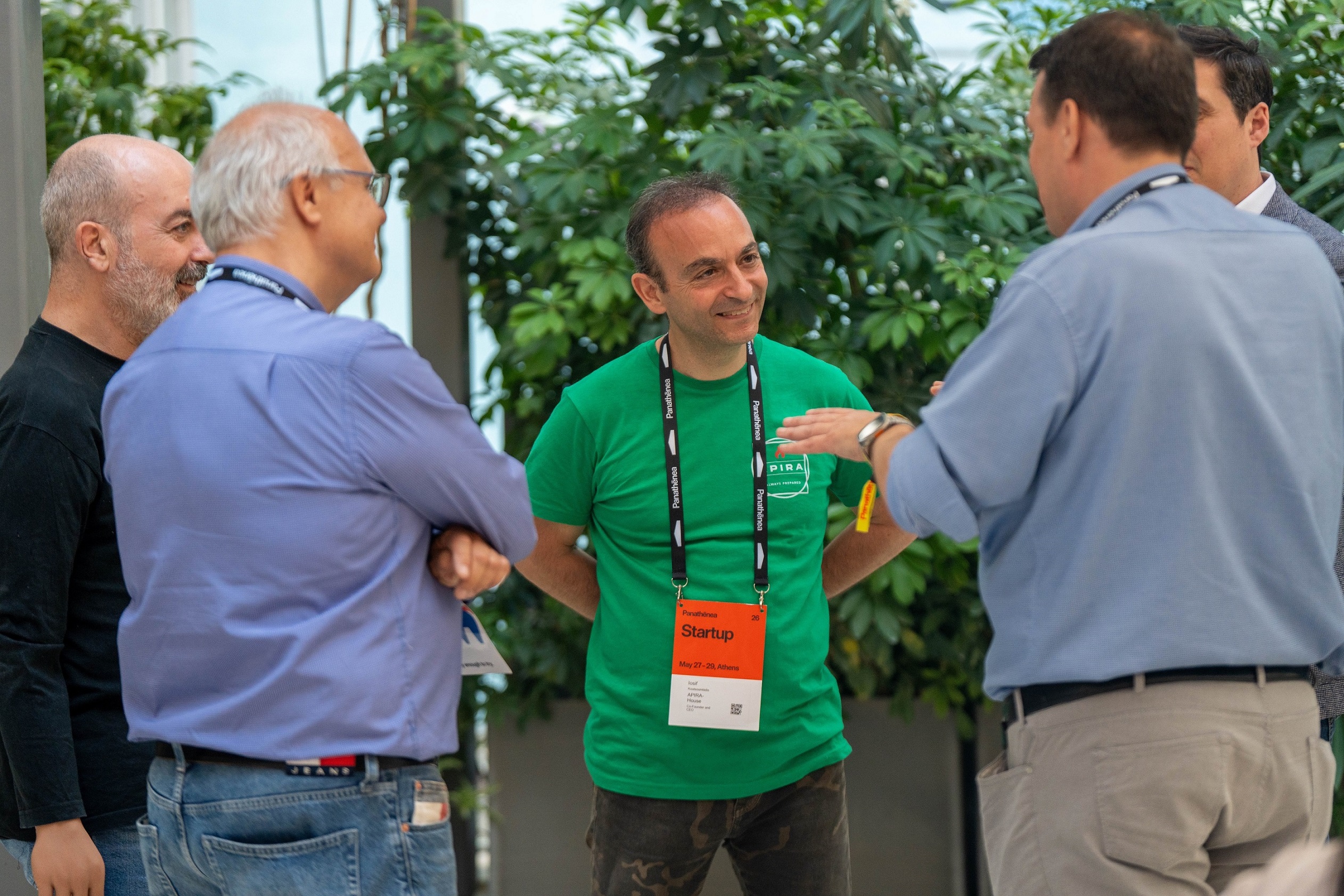
An interview with Iosif Koutsoumpidis, Co-Founder of APIRA
APIRA, the German ClimateTech startup developing patented autonomous wildfire protection systems for homes and buildings, was one of only four startups selected by the German-Hellenic Chamber of Industry and Commerce (AHK Greece) to join the German Delegation at Panathēnea 2026. Between a networking briefing hosted with German industry representatives and a live panel on scaling startups abroad, co-founder Iosif Koutsoumpidis spent three days doing something rarer than pitching: listening. We sat down with him after the festival to talk about what APIRA actually builds, what changed for him in Athens, and where the company goes from here.
Let’s start at the root. What is APIRA, in one sentence someone outside climate tech would understand?
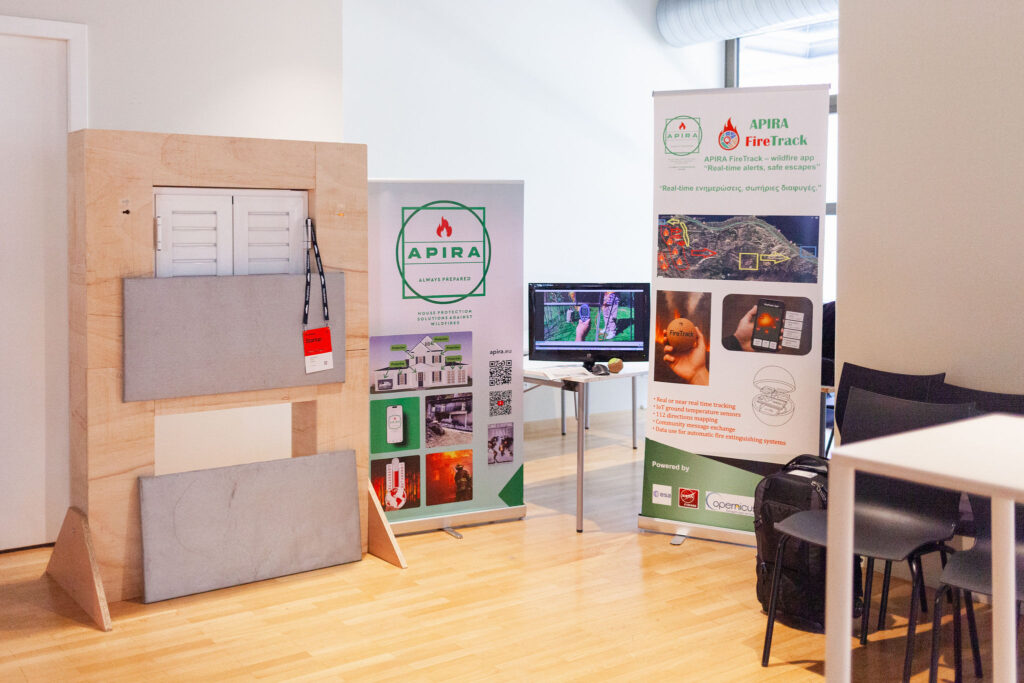
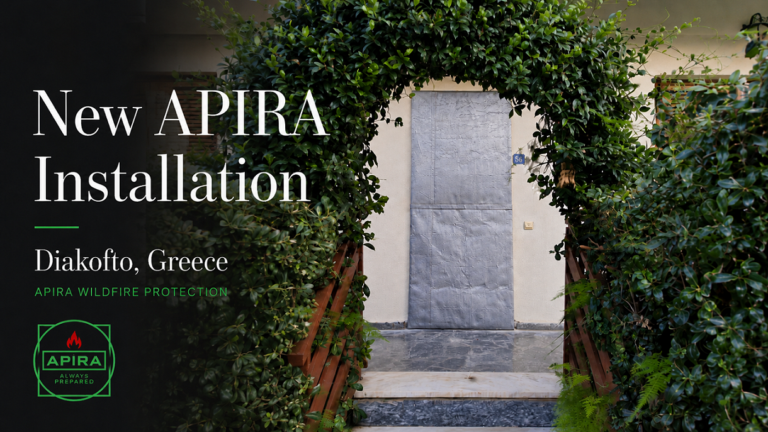
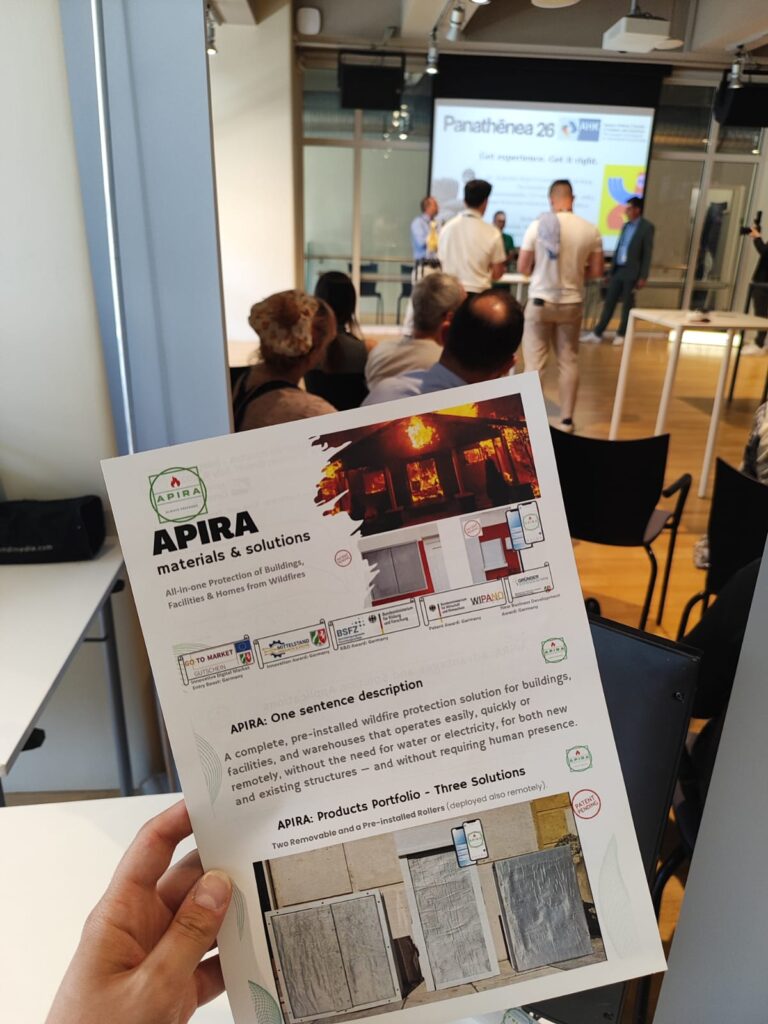
APIRA is a wildfire protection system for homes. It wraps and shields the vulnerable points of a building, windows, doors, roofs, shutters, garages, generators, using advanced materials and IoT controls, and it does this without needing water, electricity, or anyone physically present. You can deploy it manually or remotely, before a fire arrives, and it holds for days or weeks if needed. It is reusable, architecturally integrated, and fully recyclable. The name says the rest: APIRA comes from the Greek “a” (without) and “pyr” (fire). No fire.
Company origin stories are often polished after the fact. Yours was not chosen; it was inherited. Walk us through it.
There is no polish here, only memory. In July 2007, our family house in a small village in the Peloponnese was one of only five homes out of eighty-five that survived a wildfire that ultimately destroyed a thousand houses, damaged eleven hundred more, and burned over four percent of Greece’s forest area that year. It survived because my uncle and cousin risked their lives defending it. Not because of any system. Because of two people who refused to leave.
That was the first time I understood the actual scale of the threat. The second came in 2018, in Mati. A hundred and four people died in a few hours. That number does not shrink with time. It reorganizes how you think about what a home is supposed to guarantee its occupants.
Alexis, Panagiotis, and I have known each other for years. We are all Scouts, and the motto stayed with us into adulthood: do a good deed every day. APIRA is what happens when that principle meets an engineering problem nobody had solved properly. Peter Thiel has a line we return to often: that you start a company because there is an important problem that governmental, nonprofit, and existing for-profit institutions are simply not solving. That is exactly our position. Wildfire protection for individual homes did not exist as a distinct category. So we built the category.
The scale of the problem you are describing is not just Greek.
No. Athens and the Peloponnese gave us the wake-up call, but the pattern is global and accelerating. In 2018, California lost over 24,000 structures. Australia’s Black Summer in 2019 killed thirty-four people, destroyed more than ten thousand homes, and killed an estimated one billion animals. Then, in January 2025 in California again: between thirty-one and forty-four deaths depending on the count, over two hundred thousand people evacuated, more than eighteen thousand homes and structures destroyed, over five hundred twenty-one thousand acres burned. These are not outliers anymore. They are the baseline a warming climate is setting for every fire-prone region on earth. A home protection system that only works in one geography is not a solution; it is a local patch. We built APIRA to cross borders because the fire already has.
Tell us about Panathēnea 2026. What was APIRA actually doing there?
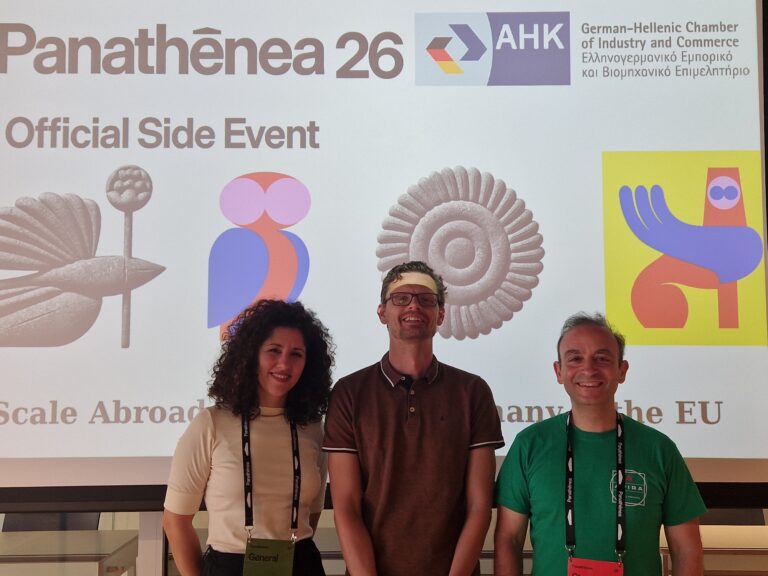
We were one of four startups AHK Greece selected to represent the German Delegation, alongside organizations working in biotechnology, advanced materials, space technology, and broader innovation ecosystems. That selection mattered to us specifically because APIRA sits at the intersection of German engineering rigor and a very Greek, very personal urgency. Being chosen alongside those organizations validated that intersection as legitimate, not just sentimental.
Day one was a networking briefing at AHK Greece’s Athens offices with the German Delegation and members of the German business and innovation ecosystem. We spoke with Dimitris Anagnostakis of Boehringer Ingelheim Hellas, Dionysios Papadopoulos of Siemens Healthineers Hellas, and Frank Werner from the German Embassy in Athens, among others. The conversation centered on the Greek startup ecosystem, technology transfer, and where German and Greek innovation can actually collaborate rather than simply coexist.
Beyond the formal agenda, the German Delegation created an exceptional environment for building professional relationships. We had the opportunity to establish new connections not only with the AHK Greece team, but also with executives from leading German companies, research organizations, and the other startups selected for the delegation. These conversations are already developing into meaningful relationships that we expect to continue well beyond Panathēnea.
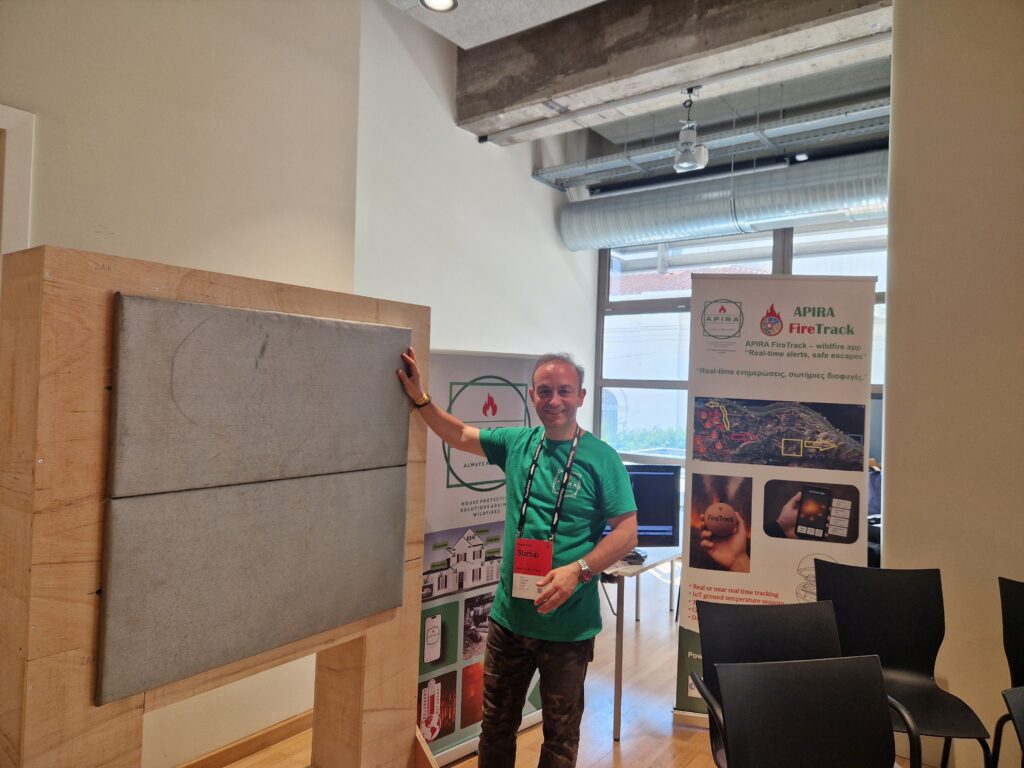
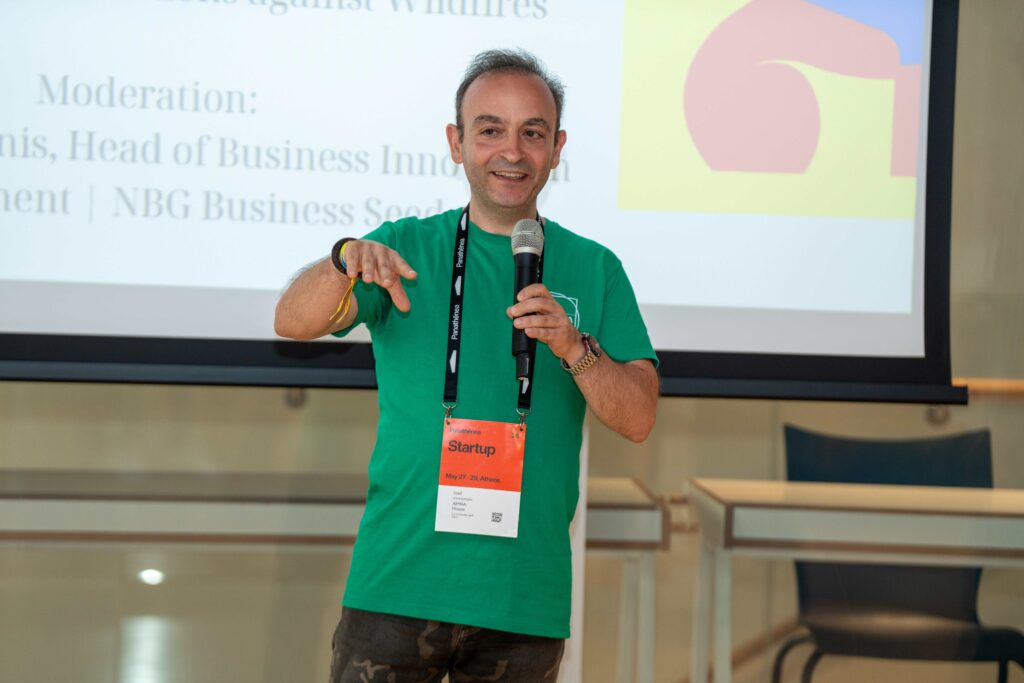
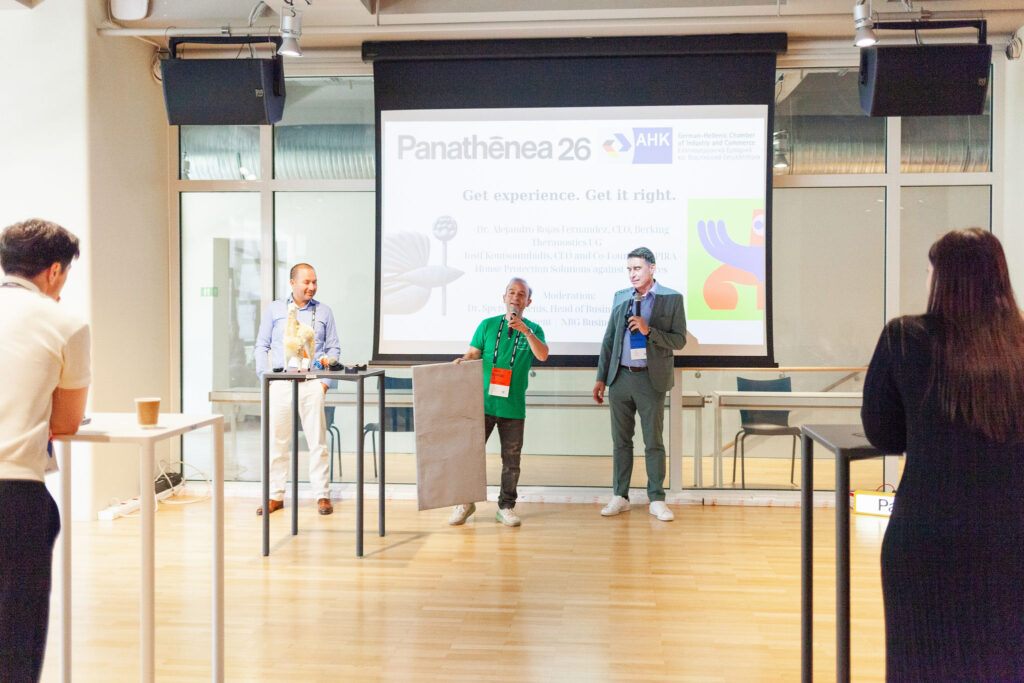
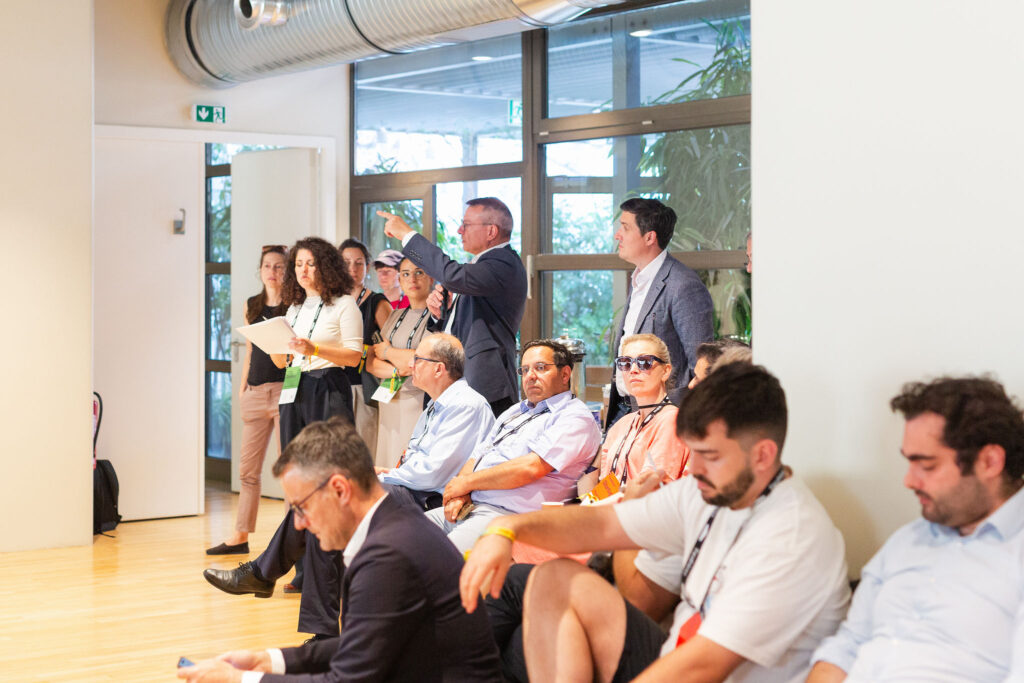
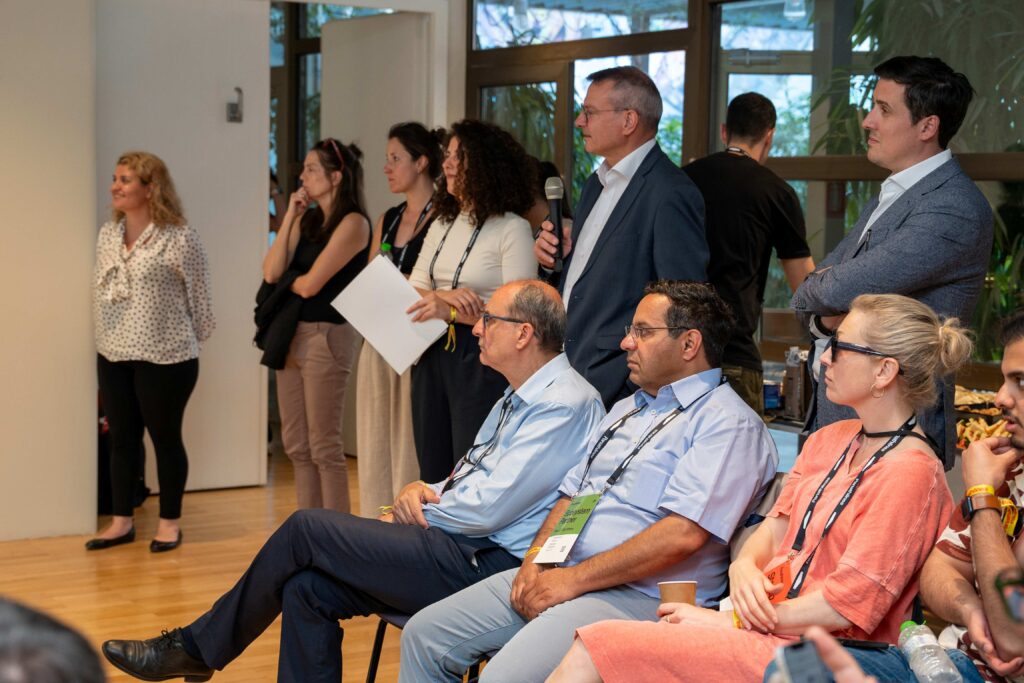
Day two was especially significant for us. At the Goethe Institut Athens, over a hundred registered participants, investors, founders, corporates, and research organizations gathered for “Scale Abroad: Navigating Germany and the EU.” I presented APIRA’s solution and sat on a panel called “Get Experience. Get It Right. Challenges and Opportunities from a Startup’s Point of View,” alongside Dr. Alejandro Rojas Fernandez, moderated by Dr. Spyros Arsenis of the National Bank of Greece. The questions from the room were not polite. They were specific: deployment logistics, insurance integration, cost per structure, remote reliability. That is the kind of scrutiny that actually improves a product roadmap.
Outside our own sessions, Panathēnea also offered access to some of Europe’s most inspiring founders and technology leaders. We attended keynote speeches and panel discussions featuring entrepreneurs such as Markus Villig (Bolt), Ioannis Antonoglou (Reflection AI), and Shuo Wang (Deel), among many others. Learning directly from founders who have successfully built global companies was every bit as valuable as presenting APIRA itself.
What is the single idea from those three days that stayed with you the longest?
That the future belongs to whoever combines technological innovation with human responsibility, not one or the other. It is easy in climate tech to hide behind the engineering and let the human cost become a statistic in a pitch deck. Panathēnea kept correcting that instinct in real time. Every serious conversation we had, with researchers, with investors, with people building in completely unrelated categories, kept returning to the same discipline: ask better questions, challenge your own assumptions, stay open to being wrong about your own solution. Innovation is not built in isolation. It is built where people with different training and different scars sit at the same table and actually listen to each other.
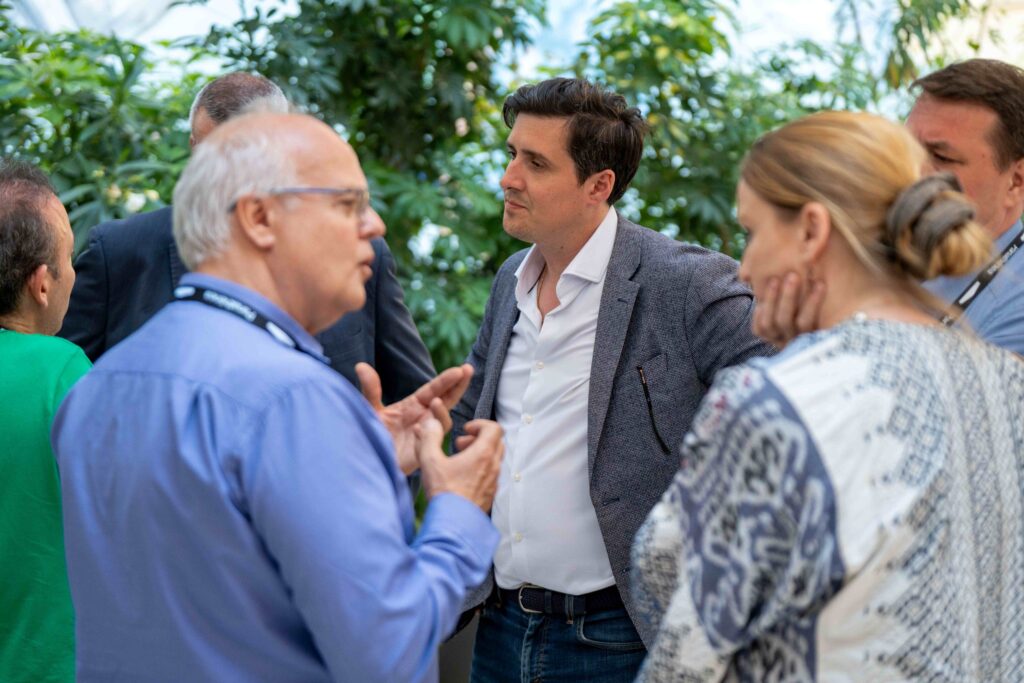
The informal conversations were equally memorable. I had the pleasure of speaking with Lars Rasmussen, co-founder of both Panathēnea and Google Maps, as well as Professor Konstantinos Daskalakis from MIT. These exchanges reinforced something I strongly believe: the most valuable ideas often emerge not during presentations, but in the conversations between them.
Did the experience change anything tactically, not just philosophically?
Yes. Concrete relationships emerged from the AHK Greece delegation that we are now following up on directly, particularly regarding technology transfer conversations with organizations working in advanced materials and ClimateTech more broadly. The panel exposed us to a sharper set of questions from the insurance and investment side than we typically get in a product demo setting, and that is already feeding into how we frame the next phase of our go-to-market conversations with insurers.
The event was also an opportunity to reconnect with many colleagues, partners, and friends from the startup ecosystem. Maintaining and expanding these relationships is just as important as creating new ones, particularly for an early-stage company operating across multiple countries. Panathēnea brought together exactly the kind of community that makes long-term collaboration possible.
What comes next for APIRA?
Three things, concretely. First, we continue to strengthen the case for APIRA as a component of fire risk insurance policies rather than a standalone consumer purchase, which is a shift several of our own customers have already suggested to us unprompted. Second, we continue building the cross-border relationships that started at events like Panathēnea into actual pilot deployments outside Greece and Germany. Third, and this is the quieter one, we keep training the next round of certified installers because the system only works at the scale we intend if deployment remains rigorous, no matter who installs it.
The challenges ahead are significant. Climate change is not negotiating with our timeline. But we came back from Athens with new relationships, sharper questions, and a stronger conviction that the people capable of solving this are already in the room; they just need more rooms like that one.
APIRA is a German ClimateTech startup developing autonomous wildfire protection solutions for homes. Learn more at apira.eu.